The town of Gernika was founded on the lands of the Porch of Lumo in 1366. The Church of Santa María existed prior to the founding of the town, as even before its mention in the town's charter as the Monasterio de Sarospe, it appears in a document dating from 1051 involving a donation to San Millán de la Cogolla. We suppose that this temple was walled, as it is well located in one of the urban centre's corners rather like a vertex and its walls were probably able to offer some defence from the flat land. Today the only old element left in the centre is the church, as the rest was destroyed during the bombing of Gernika. Following the rebuilding work carried out by the organisation for devastated regions, the town that emerged has little to do with the mediaeval town, as although it maintains the same number of streets, these were modified in terms of their width and alignment, with plots of land and the arrangement of dwellings being altered.
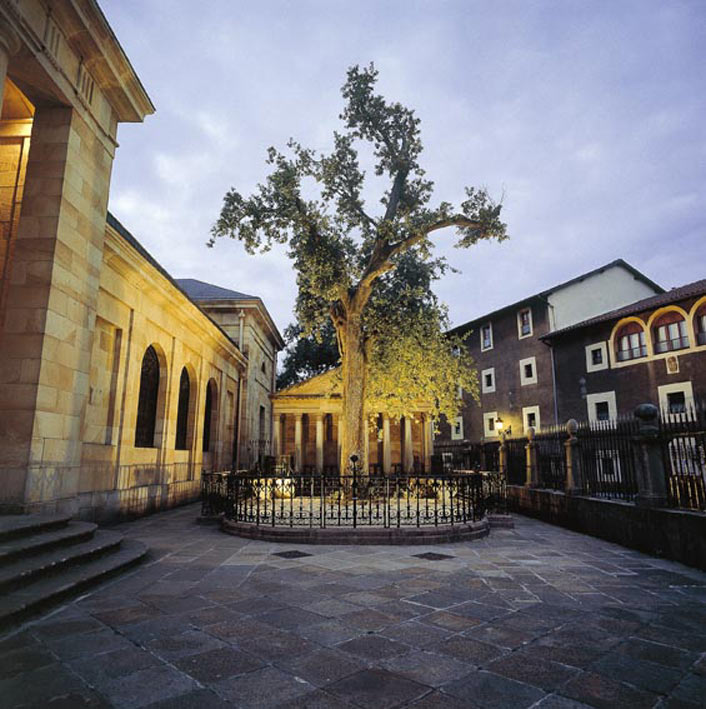
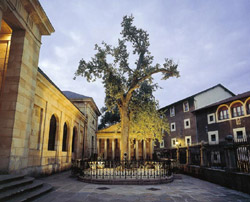
Since the Middle Ages, at least since the 15th century, the General Meetings of the Manor of Bizkaia have been held in Gernika, under the town's oak tree. The
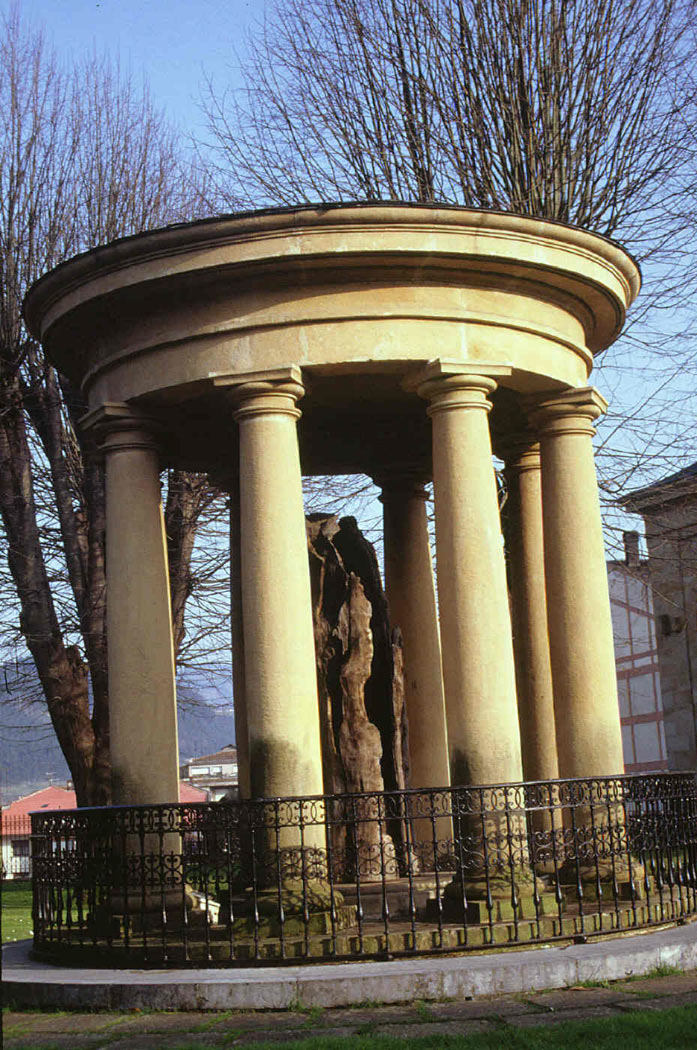
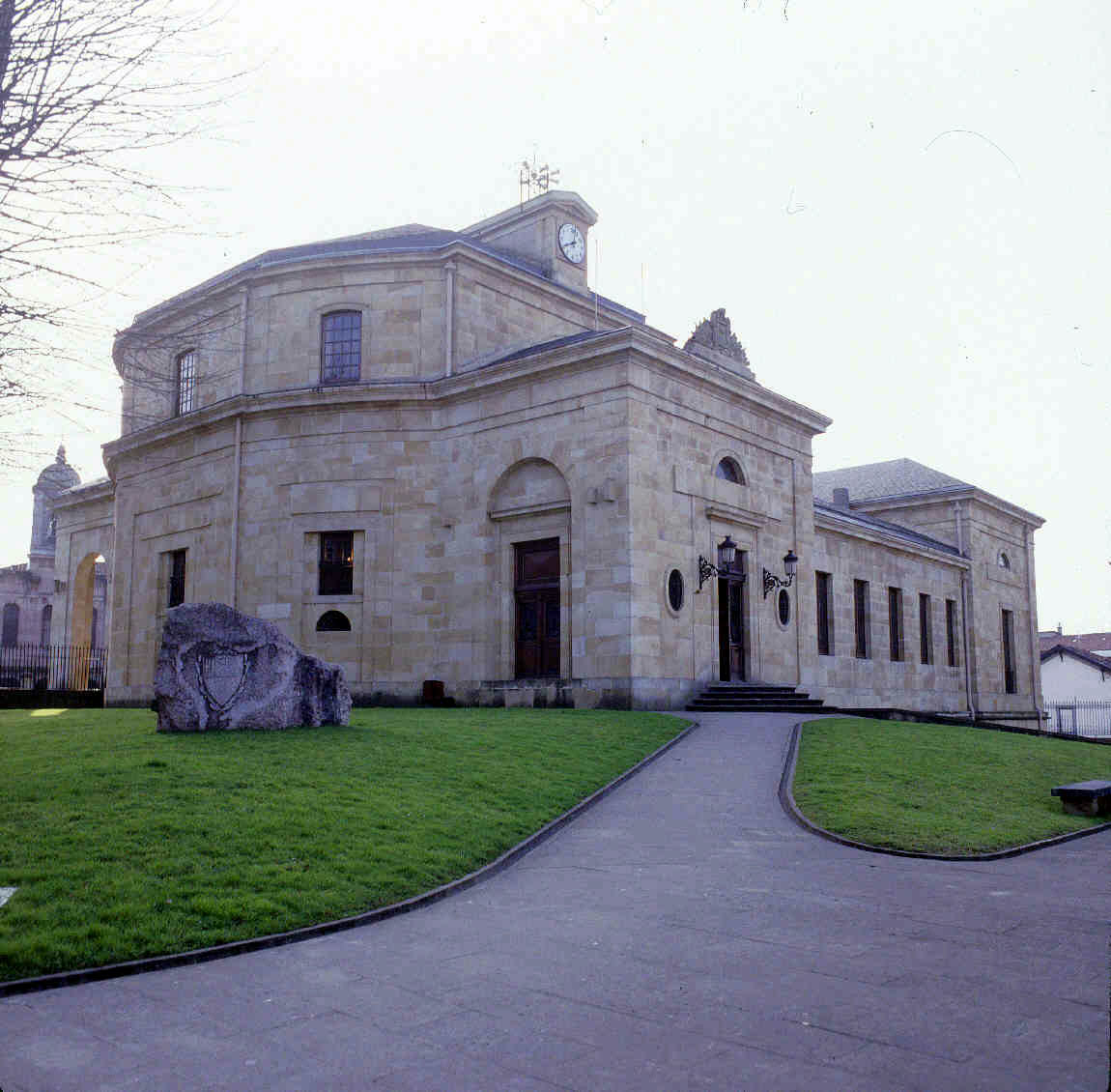
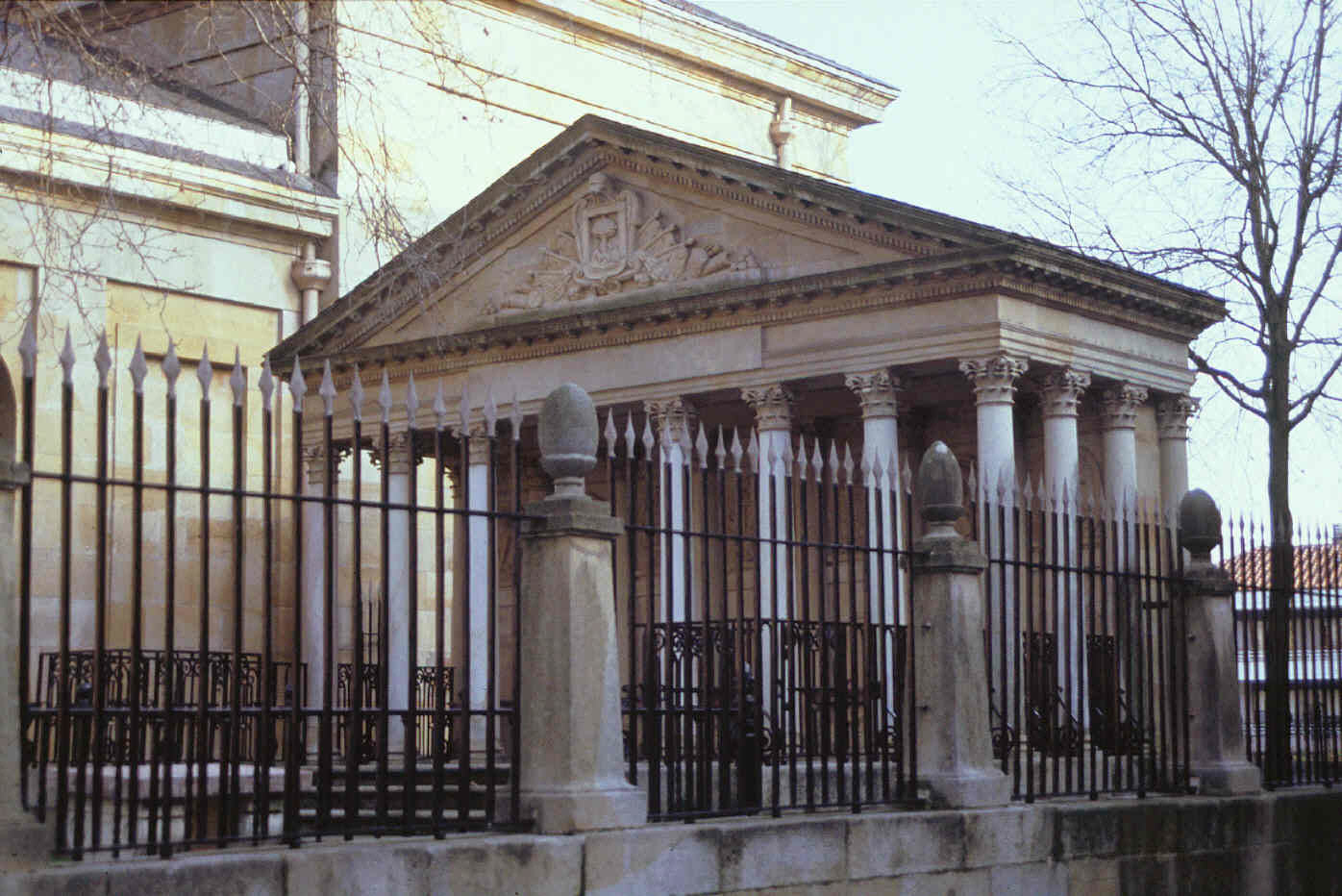
Casa de Juntas (Assembly Hall) building, situated on a hill overlooking the Mundaka estuary, was made up of two elements: the historical tree of Gernika with its platform and open space where the assembled met, and the church of Nuestra Señora de la Antigua, which, over time, became the place where the meetings were held. However, in the modern era other complementary buildings have been added, built in the first third of the 19th century, and they now form the site of the Casa Foral which retains the essential parts: the archive, the church, the platform for speeches, and the pavilion for the old tree. The current tree is a descendant of previous ones. It was planted in 1860 and grew whilst the old tree started to wither and finally dried up in 1892.