|
"Euskadi" Prizes for Literature
Judges' decision
Literature in Euskera
Young People's Literature in Euskera
Donostia-San Sebastián, 17 October 2001
 Literature in Euskera Literature in Euskera
Winner: RAMON SAIZARBITORIA
Awarded for: Gorde nazazu lurpean
Publisher: Erein
Young People's Literature in Euskera
 Winner: KARLOS LINAZASORO Winner: KARLOS LINAZASORO
Awarded for: Bota gorriak
Publisher: Ed. Anaya-Haritza
All four "Euskadi" Prizes for Literature (Literature in Euskera, Literature in Spanish, Young People's Literature in Euskera and Best Translated Work into Euskera) will be awarded by the Lehendakari at an event which will be held this year on 20 November in Vitoria-Gasteiz.
Donostia-San Sebastián, 17 October 2001
2001"EUSKADI" PRIZE FOR LITERATURE IN SPANISH
a) Jury
Sra. Dª Arantza Urretabizkaia Bejarano, presidenta del jurado.
Sr. D. Joxe Agustín Arrieta Egiguren, vocal del jurado.
Sra. Dª Laura Uruburu Totorikaguena, vocal del jurado.
Sr. D. Gorka Aulestia Txakartegi, vocal del jurado.
Sr. D. Ur Apalategi Idirin, vocal del jurado.
Sra. Dª Francisca Pulgar Vernalte, secretaria del jurado.
b) Prize and prize-winner
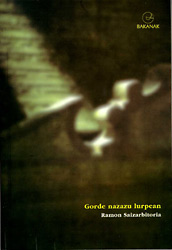 Winner: RAMÓN SAIZARBITORIA Winner: RAMÓN SAIZARBITORIA
Awarded for: Gorde nazazu lurpean
Publisher: Ed. Erein
Amount - Concept
PRIZE 2,000,000.- pesetas net Payment in hand.
500,000.- pesetas net Payable upon the elaboration of a catalogue presenting the prize-winning work and other works by the author.
500,000.- pesetas net Payable upon signing a contract for the publication of the prize-winning work in any other language.
TOTAL 3,000,000.- pesetas net
c) Jury's reasoning
The jury has unanimously agreed to bestow the 2001 Euskadi Prize for Literature in Euskera on GORDE NAZAZU LURPEAN written by RAMON SAIZARBITORIA and published in 2000 by EREIN. The book, which consists of five stories, is unquestionably of excellent literary quality. A subtle thread weaves together the five different stories, transmitting a deep sense of unity. In this refined book the author successfully combines History and Science.
d) Brief overview of the author
Ramon Saizarbitoria (Donostia, 1944) is a Sociologist and writer. He has written a number of works associated with social services. Saizarbitoria is the Director of SIIS, the Centre for Research and Documentation. In 1994 he was awarded the 1st Sustatu Prize by the Basque Government in recognition of his career.
Since the 1960s Saizarbitoria has been an active contributor to various types of media. In 1967, together with other writers, he founded the LUR publishing house and a few years later, the literary journal Oh Euzkadi. He is the winner of the fourth edition of the Rikardo Arregi Prize (1992).
Saizarbitoria has had a number of his literary works published, the most outstanding of which are listed below:
- Kapitaina (cuento recogido en la publicación colectiva titulada Hegatsez , 1971).
- Egunero hasten delako, Lur, 1969, 1979; Erein arg., 1987 (novela)
- Ehun metro, Kriselu, 1976; Erein arg., 1985, 1997.
- 100 metros, Nuestra Cultura, 1979; Orain, S.A., 1995. Traducción de Ehun metro.
- Ene Jesus, Kriselu, 1976; Erein arg., 1994.
- Hamaika pauso, Erein arg., 1995
- Los pasos incontables, Espasa-Calpe, S.A., 1998. Traducción de Hamaika pauso.
- Bihotz bi. Gerrako kronikak, Erein arg., 1996, 1997.
- Amor y guerra, Espasa-Calpe, 1999.Traducción de Bihotz bi. Gerrako kronikak.
- Aberriaren alde (aberriaren kontra), Alberdania arg., 1999.
e) Notes on award-winning work
The award-winning book contains five stories, the first of which is "Gudari zaharraren gerra galdua". This story is set in the trenches of Mount Intxorta. The 1936 war reappears in at least two more stories: the fourth one, entitled "Bi bihotz, hilobi bat" and the fifth and last story, "Asaba zaharraren baratza", which tells how the body of Sabino Arana is taken elsewhere to be safeguarded in light of the advance of Franco's troops after the collapse of the Mt. Intxorta front.
The story "Rossettiren obsesioa" starts out with a question - "What's wrong with you Basques?" - and reaches a diagnosis of the Basque people - "You're so melancholic". It is the tale of two women, Victoria and Eugenia, who although they look very much alike, are completely different. We also see the most miserable and comic facets of a man whose love for the two women, each in a very different way, is not returned. The man in this story is quite reminiscent of the main character in the story "Bi bihotz, hilobi bat".
"Marcel Martinen aitatasun ukatua" shows us the extent to which relationships can so absurdly degenerate, and how when it is least expected, with no clear reason, an insignificant comment can inadvertently open a deep incurable wound in a couple.
This book, awarded the Critic's Prize, is a finalist in the 2001 National Fiction Prize.
f) Previous prize-winners
(1997) Epaltza, Aingeru, Tigre ehizan, Elkarlanean arg.
(1998) Juaristi, Felipe, Galderen geografia, Alberdania arg.
(1999) Lertxundi, Anjel, Argizariaren egunak, Alberdania arg.
(2000) Oñederra, Lourdes, Eta emakumari sugeak esan zion, Erein arg.
2001 "EUSKADI" PRIZE FOR THE BEST YOUNG PEOPLE'S LITERATURE IN EUSKERA
a) Jury
Sr. D. Felipe Juaristi Galdós, presidente del jurado.
Sra. Dª Arantza Baltzategi Juldain, vocal del jurado.
Sr. D. Xabier Kaltzakorta Elorza, vocal del jurado.
Sr. D. Jon Suárez Barrutia, vocal del jurado.
Sra. Dª Nerea Arregi Urriolabeitia, vocal del jurado.
Sra. Dª Francisca Pulgar Vernalte, secretaria del jurado.
b) Prize and prize-winner
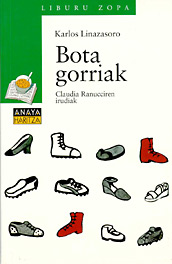 Winner: KARLOS LINAZASORO Winner: KARLOS LINAZASORO
Awarded for: Bota gorriak
Publisher: Ed. Anaya-Haritza
Amount - Concept
PRIZE 1,500,000.- pesetas net Payment in hand.
250,000.- pesetas net Payable upon the elaboration of a catalogue presenting the prize-winning work and other works by the author.
350,000.- pesetas net Payable upon signing a contract for the publication of the prize-winning work in any other language.
TOTAL 2,100,000.- pesetas net
c) Jury's reasoning
Following wide debate on the literary quality of a number of candidates' works, the jury has unanimously decided to bestow the "Euskadi" Prize for Young People's Literature in Euskera eon the story entitled "Bota gorriak" by Karlos Linazasoro.
In the jury's opinion, the prize-winning story is predominantly recognised for the following merits: on one hand, its structure, originality and novelty; and on the other, the language employed (especially his use of puns and word games) and lyricism.
d) Brief overview of the translator
Karlos Linazasoro (Tolosa, 1962) took his Bachelor's Degree in Basque Philology at the EUGT. He is currently in charge of the Tolosa Municipal Library. Linazasoro has written a number of stories for young people, the most noteworthy of which are listed below:
- Punta araucaria (Ignacio Aldekoa saria, 1994)
- Kartapazioko poemak, Ibaizabal-Edelvives arg. (1998)
- Altzeta, Alberdania 1996
- Besterik gabe, Albina, Ibaizabal, 1991.
- Euriaren eskuak, Alberdania, 1995
- Zer gerta ere, Alberdania, 1995
- Gret, Kutxa, 1998
- Apunte eta ahanzturak, Kutxa, 1993
- Eldarnioak, Erein, 1991
- Ipuin arriskutsuak, Erein 1994
- Oihan ttiki baina txukun batean, Aizkorri arg., 1999
- Hamabi titare, Aizkorri arg., 1999
- Hugo, Aizkorri arg., 2000
- Waleter Sismoley Elizeoko zelaietan, Elkarlanean arg., 2000
- Bota gorriak, Anaya-Haritza, 2000
- Ez balego beste mundurik, Alberdania, 2000
- Ipuin errotikoa, Alberdania, 2001
- Burdindenda, Euskaltzaindia-BBK, 1998
- Udazkeneko karabana erratua, Elkar, 1991
- Gau, gau, gau, SM, 1997.
e) Notes on the award-winning work
Arranged into seven short chapters, this is the story of the fantastic and exciting adventures of Karlos. Although bored stiff by everyday chores, Karlos secret weapon is his red boots. When he puts them on he can run as fast as lightning and shimmey up a lamppost in a flash. The only person who is in on his secret is Romina, his secret love.
f) Previous prize-winners
(1997) Atxaga, Bernardo, Xola eta basurdeak, Erein arg.
(1998) Zubizarreta Dorronsoro, Patxi, Gizon izandako mutila, Pamiela arg.
(1999) Igerabide, Juan Kruz, Jonas eta hozkailu beldurtia, Aizkorri arg.
(2000) Juaristi, Felipe, Animalien inauteria, Erein arg.
"Euskadi" Prizes for Literature
Judges' decision
Literature in Spanish
Best translated work
Bilbao, 10 October 2001
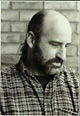 Literature in Spanish Literature in Spanish
Winner: FERNANDO ARAMBURU IRIGOYEN
Awarded for: Los ojos vacíos
Publisher: Tusquets Editores
Best translated work into Euskera
 Winner: JOSU ZABALETA KORTABERRIA Winner: JOSU ZABALETA KORTABERRIA
Awarded for: Fantasiazko ipuinak
Original title: Contes fantastiques complets
Author: GUY DE MAUPASSANT
Publisher: Ed. Ibaizabal
The prizes for Literature in Euskera and Young People's Literature in Euskera will be awarded and published during the month of October.
All four "Euskadi" Prizes for Literature (Literature in Euskera, Liteeature in Spanish, Young People's Literature in Euskera and Best Translated Work into Euskera) will be awarded by the Lehendakari at a public event which, as in previous years, will be held in November.
Bilbao, 10 October 2001
2001"EUSKADI" PRIZEFOR LITERATURE IN SPANISH
a) Jury
Mr. Ángel Ortíz Alfau, jury president.
Ms. Ana Arregi Martínez, jury member.
Mr. Enrique Gutiérrez Ordorika, jury member.
Ms. María Bengoa Lapatza-Gortazar, member.
Mr. Iban Zaldua González, jury member.
Ms. Francisca Pulgar Vernalte, jury secretary.
b) Prize and prize-winner
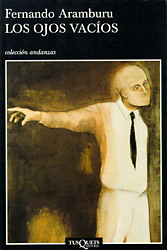 Winner: FERNANDO ARAMBURU IRIGOYEN Winner: FERNANDO ARAMBURU IRIGOYEN
Awarded for: Los ojos vacíos
Publisher: Tusquets Editores
Amount Concept
PRIZE 2,000,000 pesetas net Payment in hand.
500,000 pesetas net Payable upon the elaboration of a catalogue presenting the prize-winning work and other works by the author.
500,000 pesetas net Payable upon signing a contract for the publication of the prize-winning work in any other language.
TOTAL 3,000,000 pesetas net
c) Jurys' Reasoning
The jury has agreed to bestow the 2001 "Euskadi" Prize for Literature in Spanish on LOS OJOS VACÍOS, written by FERNANDO ARAMBURU and published in 2000 by TUSQUETS EDITORES, for its literary quality and its contemporary association with the picaresque tradition. The jury also recognizes the author's use of irony in the development of his characters and in the creation of an almost mythical allegorical setting. Although the story resounds with echoes of conflicts dating to the first half of the twentieth century, it lends itself to modern reading.
d) Brief overview of the author
Fernando Aramburu (Donostia-San Sebastián, 1959). Bachelor's degree in Hispanic Philology. Ever since he was young, the San Sebastián author has had an ongoing love affair with literature, either as a writer or a reader, and has taken part in a number of literary forums. An example is his participation in the creation and development of Grupo Cloc, a group which was very active in Donostia-San Sebastián in the 1980s. He now collaborates with "Puerta Norte/Ipar Atea" a Bilbao-based group dedicated to the dissemination of arts and letters.
Aramburu has been living and working in Germany since 1984 where he divides his time between writing and teaching Spanish to the children of emigrants in Lippstandt and Gieseke (North Rhine-Westphalia).
Most outstanding literary work.
- Ave sombra / Itzal Hegazti, Luis Haranburu Editor, 1981 (poesía).
- Bruma y conciencia / Lanbroa eta kontzientzia (1977-1990), EHU/UPV, 1993 (poesía)
- El librillo, Ediciones Hiperión, S.L., 1995 (poesía)
- Fuegos con limón, Tusquets Editores, 1996 (novela). Recientemente traducida al alemán. Galardonada con el Premio "Ramón Gómez de la Serna" en 1997.
- No ser duele, Tusquets Editores, 1997 (cuentos)
- El ladrón de ladrillos, Ediciones S.M., 1998 (novela)
- Adreilu lapurra, Ediciones S.M., 1999 (Traducción al euskera de El ladrón de ladrillos (realizada por Gerardo Markuleta) (novela)
- Juicios finales, Ed. Senén Pérez Nuñez, 2000 (historia y crítica literaria)
- Los ojos vacíos, Tusquets Editores, 2000 (novela)
e) Notes on award-winning work
August 1916: times of tribulation in Antíbula. The monarch of this country has been ominously murdered; the queen has tried shamelessly to escape and dictatorship can be felt in the air. A rather mysterious foreigner arrives at old man Cuiña's inn. Political convulsion - with which the stranger does not appear to be totally uninvolved - will soon lead him to disaster. But in time the main character and narrator of the novel is born from the foreigner's secret amorous encounters with the innkeeper's young daughter. Considered the son of the devil for being a bastard, the child does indeed seem to be branded with an invisible stigma which will accompany his as he grows in the midst of astonishing discoveries and cruel deceptions. His grandfather's miserable fierceness and his mother's sad sweetness, together with his emotional coming of age and the happiness provided to him by books, will be the points of reference in a life which, possibly like any else, aspires only to make sense out of the surrounding chaos.
(Taken from ARAMBURU, Fernando, Los ojos vacíos, Tusquets Editores, 2000)
f) Previous prize-winners
(1997) Ugarte, Pedro, Los cuerpos de las nadadoras, Ed. Anagrama
(1998) Fernández de la Sota, José, Todos los santos, Ed. Hiperión
(1999) Atxaga, Bernardo, Lista de locos y otros alfabetos, Ed. Siruela
(2000) Díaz-Mas, Paloma, La tierra fértil, Ed. Anagrama
2001"EUSKADI" PRIZEFOR THE BEST TRANSLATED WORKINTO EUSKERA
a) JurySMr. Koldo Biguri Otxoa de Eribe, president.
Ms. Mari José Kerexeta Sarriegi, member.
Mr. Mikel Hoyos Sein, member.
Mr. Mikel Murua Irigoien, member.
Mr. Pedro Mª Díez de Ulzurrun Sagala, member.
Ms. Francisca Pulgar Vernalte, secretary.
b) Prize and prize-winner
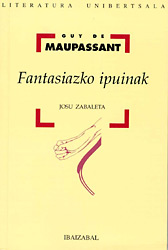 Translator: JOSU ZABALETA KORTABERRIA Translator: JOSU ZABALETA KORTABERRIA
Awarded for: Fantasiazko ipuinak
Original title: Contes fantastiques complets
Author: GUY DE MAUPASSANT
Publisher: Alberdania
The prize-winner will be awarded 1,500,000 pesetas net in cash, the awards ceremony is scheduled to take place in November.
c) Jury's reasoning
In the opinion of the members of the jury, Josu Zabaleta has done a splendid job of translating this work into Euskera. His precise language, rich in nuances and resources, is an excellent rendering of French writer Guy de Maupassant's nineteenth century legacy to universal literature.
The Jury wishes to bestow honourable mention on XABIER OLARRA LIZASO (Tolosa, 1953) for his translation of THE DEVIL'S DICTIONARY by AMBROSE BIERCE, entitled in Euskera DEABRUAREN HIZTEGIA. Owing to the characteristics of the "Euskadi" Literature prize, this work was not eligible to take the prize; however, in the jury's opinion Olarra has demonstrated great skill in finding ways of rendering the puns, cynicism and light-hearted playful style American author (1842-1914), in addition to the poems included in the work.
d) Brief overview of the translator
Josu Zabaleta (Legazpia, 1948). Zabaleta studied Philosophy in Lovaina and Rome. He was co-founder of the Publishing House Editorial Hordago (1977), and professor at the Martutene School of Interpretation and Translation (1980-1991). He also co-founded EIZIE (Basque Interpreters and Translators Association) and Senez. , specialised journal of terminology and translation. Director of the Encyclopaedic Dictionary Lur (1991-2000), Zabaleta now works for the linguistic services firm Rosetta.
Author of numerous translations, the most noteworthy of which are listed below:
DAUDET, Alphonse, Taraskoneko Tartarin, Lur arg., 1981.
SCIASCIA, Leonardo, Itsaso ardo kolorea, Erein, 1991.
PASOLINI, Pier Paolo, Gauza baten ametsa, Alberdania, 1998.
Munduko ipuinak, Erein (6 libros)
e) Notes on the award-winning work
Anyone wishing to gain an understanding of the events and background of twentieth-century short story or fiction must indisputably take French writer Guy de Maupassant (1850-1893) into account. The stories in this book will help attain this goal, as well providing readers with valuable assistance in unravelling the endless maze, replete with obscure nooks and crannies, that invariable leads from fear to madness.
f) Previous prize-winners
(1997) Morales Belda, José Gure garaiko heroia, Lermontov, M.J., Ibaizabal arg.
(1998) Muñoz Otaegi, Jon, Harreman arriskutsuak, Declos, Ibaizabal arg.
(1999) Garzia Garmendia, Juan, Ipuin hautatuak, Borges, J.L., Ibaizabal arg.
(2000) Aldasoro, Irene: Dublindarrak, Joyce, J., Alberdania arg.
|