The Basque Country acts to combat climate change
 In June 2015, the Basque Government passed the new Basque Strategy regarding Climate Change on a timeline up to 2050. The aim is to drive a less carbon-dependent socio-economic model, that minimises our vulnerability regarding climate change and which allows us to progress towards a sustainable economy.
The Strategy is in line with the targets set by the European Union: The Basque Country has thus set the reduction target for 2030 of at least 40% of their GHG emissions, and for 2050 the target is to reduce them by at least 80%, all against 2005.
The Basque Country has to achieve 40% renewable energy consumption out of the final consumption by 2050 in order to reach this target.
In keeping with the European Adaptation Strategy and the foreseeable impacts of climate change in the Basque Country, this Strategy seeks to ensure the resilience of the Basque territory to climate change.
 The Basque Climate Change Strategy, Klima 2050, is the result of a long process, started in 2014 when a strategic focus document was produced. Numerous climate change experts were involved, including researchers from technology centres and at the University of the Basque Country, and with the cooperation of the different ministries of the Basque Country, local councils and provincial councils, along with civil society through the different participation forums set up.
 The Environmental Framework Programme (EFP) is the plan that sets the course and coordinates the environmental courses of actions of the whole Basque Government. Therefore, on the one hand, it analyses and transfers European policies to our territory and, on the other hand, it harmonises, guides and mutually engages with the local administration in the coordination and prioritization of the policies to be implemented in the coming years.
As part of its drafting process, the IV Environmental Framework Programme 2020 has reviewed the degree of progress of what is established in the Basque Environmental Strategy for Sustainable Development 2002-2020, with the main objectives of providing the EFP with a long-term strategic view. Therefore, the EFP 2020 updates this Strategy, helping the Basque Country to set its sights on 2030 and establishing new targets for 2020 based on existing current expertise.
The new aspects of the programme include implementing a preventive environmental policy that replaces the traditional reactive policy and the search for economic return on the investment in the environment during the last 30 years.
The IV Environmental Framework Programme has six key projects broken down into 75 lines of action that aim to turn the Basque Country into a competitive low carbon economy that is innovative and resource efficient. The key project includes integrating health and the environment into the territorial policy, green taxation, circular supply chains or the new green infrastructures in degraded zones.
 2002
2002
- Environmental Strategy for Sustainable Development 2002-2020. Aimed at “Limiting the impact on climate change”.
- Start of calculating Annual Greenhouse Gas Inventories for the Basque Country.
- Sustainable Transport Management Plan 2002-2012.
- Active participation in the setting up of the Network of Regional Governments for Sustainable Development (nrg4sd).
2004
- Practical guide to prepare Municipal Sustainable Mobility Plans
2006
- 30% Corporation Tax rebate for investments in equipment from the Basque Clean Technologies List.
2007
- Studies on flood costs in climate change scenarios: Bilbao and Urola Kosta.
2008
- Climate Change as the main environmental problem according to the citizens of the Basque Country.
- First Basque Plan to fight against Climate Change 2008-2012.
- 3E Energy Strategy 2010.
- Setting up the BC3, Basque Centre for Climate Change.
2009
- Creation of the Stop CO2 Euskadi, platform, voluntary reductions and emissions register.
- First Climate Change municipal bylaw (Durango).
- Focus CO2, less cost, less CO2. Action Guide for SMEs.
2010
- Knowledge Map of Climate Change Research in the Basque Country.
- Report on strategies to adapt and mitigate climate change in spatial planning.
2011
- Energy Strategy of the Basque Country 2020 (3E2020).
- Analysis of Impacts and Adaptation in the Basque Country (K-Egokitzen).
- Maps showing likelihood of flooding from rising sea levels and peaks along the whole Basque coastline in climate change scenarios.
2012
- Guide for the application of the UNE-ISO 14064-1:2006. Carbon Footprint standard.
- Urban planning manual for the mitigation and adaptation to climate change and Guide for preparing municipal climate change adaptation programmes.
2013
- Bilbao: Test case for the RAMSES European project (mitigation and adaptation of cities).
- Impact analysis on the marine ecosystem and resources of the Bay of Biscay (European MEECE project).
- Strategic focus to prepare the Basque Climate Change Strategy.
2014
- Environmental Framework Programme 2020 of the Basque Country. Roadmap to a low-carbon economy.
- 19 Basque municipalities signed up to the European Covenants of Mayors initiative. Donostia-San Sebastián signed up to Mayors Adapt, the initiative to adapt adaptation to climate change.
- Carbon budgets of the Basque Administration.
- The Basque Country signed up to the "Compact of Regions"
2015
The Basque Autonomous Community set as a climate change mitigation target for 2012 of not increasing its greenhouse gas emissions by more than 14% with respect to 1990. The target has been easily achieved, with the increase of emissions in 2012 being limited to 4% with respect to 1990. This emissions trend occurred during a period of great economic growth, as the GDP rose by 71% between 1990 and 2012, which reflects an improvement in the efficiency of the Basque Country in terms of greenhouse gas emissions. Meeting this goal in the energy, industry, transport, residential and services, farming and forestry, and waste management sectors has been achieved by means of energy efficiency and savings, fostering renewable energies and cutting non-energy savings.
As regards energy efficiency and savings, the emphasis has mainly been on the industrial sector, by means of subsidies for more efficient technologies, and on the residential sector, with the development of Sustainable Building Guides. In the mobility sector, climate change criteria have likewise been integrated in the Guidelines for Spatial Planning and public transport infrastructures have been promoted, such as the Vitoria-Gasteiz tramway or the extension of the Bilbao Metro.
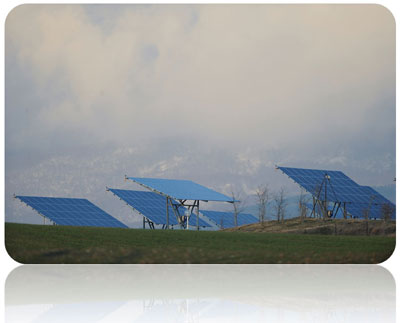
As regards the promotion of cleaner energies, there were 545 MW of cogeneration, 290 MW of wind powers in wind farms and mini wind farms and 23.1 MW of photovoltaic solar energy as of 2012. The Mutriku wave power plant, with 0.3 MW of power, has come into service and a cutting-edge marine energy research centre, the BIMEP with a capacity of 20 MW, is being completed. In a similar vein, a biomass facility, from timber manufacturing (pellet), has been commissioned in Orozko and subsidies are available to encourage installing biomass boilers.
Greenhouse gas emission inventory
From the point of view of carbon sinks, removals increased by 1.5% in 2008-2012 with respect to 1990, compared to the 1% increase envisaged in the Plan to Combat Climate Change 2008-2012.
Inventario de carbono orgánico en suelos y biomasa de la CAPV
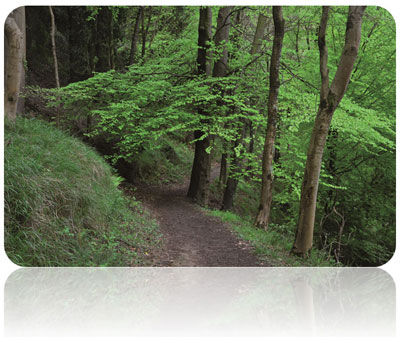
Finally, as regards adaptation to climate change, work has been carried out on different research projects, such as the Etortek “Impacts and Adaptation in the Autonomous Community of the Basque Country” project, conducted with the involvement of 3 technology centres and 5 departments of the University of the Basque Country. Climate change adaptation criteria have also been integrated in municipal planning, in the Internal River Basin Management Plans of the Basque Country and in the Guidelines for Spatial Planning.
Cambio climático. Impacto y adaptación
Last modified date: