Expected impacts of climate change in the Basque Country
Increase of the minimum temperatures in winter and the maximums in summer
By the end of the 21st century, extreme minimum temperatures are expected to increase by between 1 and 3 ºC during winter. The average extreme minimum temperature between 1978 and 2000 was -2.35 ºC, while it is forecast to be -1.84 ºC between 2070 and 2100.. In other words, those temperatures will increase by 0.51 ºC on average.
The number of frozen days will fall by 50%. Disappearance of the “cold snaps” phenomenon (episodes between 7 and 19 days) from 2020 onwards.
By the end of 21st century, the extreme maximum temperatures will increase by 3 ºC during the summer. Consequently, longer heat waves and slightly more frequent ones are expected. Between 1978 and 2000, only 10% of summer days were classified as being in heat waves. However, heat waves could account for 30% of summer days between 2020 and 2050 and may rise to 50% by the end of the century.
Drop in rainfall by between 15% and 20% by the end of the century
Rainfall is forecast to drop by between 15% and 20% by the end of this century. Rainfall will increase by between 5% and 20% in winter and will decrease by between 30% and 50% in summer. The frequency of days with moderate rain will fall and the number of days with very heavy rain will rise.
Warming of the water temperature and rise of sea level
By the end of the 21st century, the temperature of the sea along the Basque coast will rise by 1.5 to 2.05 ºC in the first 100 metres of depth. The sea level will rise between 19 and 49 cm. In the case of the Bay of Biscay, the forecast is for the sea water to have a pH close to 7.85 and partial CO2 pressure of 700 ppm.
Water resources: Lower water yield and larger flood-prone area
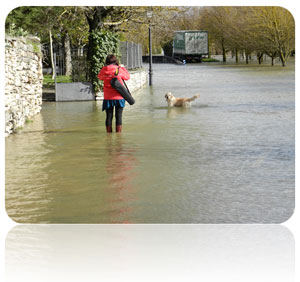 The scenarios show a drop in the water supply in winter and spring of between 6% and 13%. This situation threatens the water supply systems. The majority of water supplies show an average to very high vulnerability due to changes in water yield.
The variability in the water system will increase, which will have an added impact on the health of the river ecosystems.
The peak flow of the rivers will increase by 20% and, therefore, the flood-prone area (3%), which a 15% rise in economic losses due to flooding by 2050. In the River Nerbioi basin, maximum rainfall will rise by 14% between 2001 and 2050, which will increase its peak flow and its flood-prone zone. Urban areas are at greatest risk due to flooding.
The increase in extreme rainfall, apart from causing floods, will make major landslides and earth flows more likely.
Urban environment: The maximum and minimum temperatures will increase in the cities
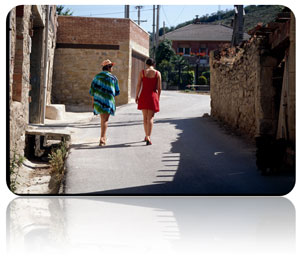 Between 2071 and 2100, maximum temperatures will rise by between 4 and 5 ºC and the minimums between 3 and 4 ºC in the three Basque provincial capitals. The number of days when the temperature is over 35 ºC in the three provincial capital will increase to around 10 days per year. The heat waves will be longer and hotter.
Between 2071 and 2100, the minimum temperatures of Donostia-San Sebastián and Vitoria-Gasteiz will rise by 2.9 ºC, while the increase will be 3.6 ºC in Bilbao. The days under freezing will fall: it will drop from the current 30 to 8.5 days in Vitoria-Gasteiz and from the current 8-9 to 1 or 2 days in Donostia-San Sebastián and Bilbao. There will be fewer “cold snap” episodes but they will last for longer.
Forty municipalities of the Basque Autonomous Community (BAC), where nearly 80% of the population resides, will be affected by extreme climate events: floods, rise in sea level and heat waves. Eight municipalities could experience those three impacts: Bilbao, Donostia-San Sebastián, Getxo, Santurtzi, Erandio, Bermeo, Errenteria and Zarautz, which account for 34% of the population.
Coastal zone: The greatest impacts are due to the rise in sea level
 The maximum rise in sea level for the Basque coast is projected to be 49 cm by the end of this century. This rise increases the risk of flooding in port and coastal urban areas. Coastal aquifers, which are sometimes used to supply nearby towns, could be contaminated with salt water. The total area in Gipuzkoa at risk due to the rise in average sea level is estimated to be 110 hectares and 12 hectares in the Urdaibai Biosphere Reserve.
Ports such as Ondarroa, Deba and Zumaia are a height of less than 30 cm over the maximum high tide forecast by the end of the century. Therefore, those ports would be easily flooded.
Beaches and sandbanks are one of the most vulnerable elements to the rise in sea level, which will reduce their width by 25% to 40%. The beaches of Zarautz and Gaztetape (Getaria) would see their tourist use, as they would lose their already small surface area of dry sand at high tide. Special mention should be made of the impact on Laida beach (Urdaibai Reserve), that could shrink by 47 metres.
Marine ecosystems and resources: Increase of the sea temperature by between 2 and 3 ºC
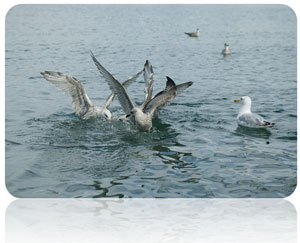 The sea temperature is a key variable for marine biodiversity, ecosystems and resources, as marine species are generally adapted to very specific temperature ranges. The Basque coast has more southerly flora and fauna than other nearby Atlantic regions and therefore an increase in the temperature can have more serious consequences. By the end of the century, the sea is supposed to increase in temperature by between 2.1 and 3 ºC in Basque estuaries during summer.
6.5% of the current surface area of wetlands and salt marshes could be affected by the rise in sea level. Consequently, the wetlands, salt marshes and other intertidal communities - such as the ocean meadows – could naturally migrate inland, even though that migration would be prevented by natural and artificial barriers in many cases.
The progressive acidification of the sea would lead to an extreme reduction in the growth of invertebrates with shells – such as mussels and limpets – or with carapaces – such as sea urchins and barnacles-.
Terrestrial ecosystems: Increase of the invasive and exotic flora, particularly in Gran Bilbao
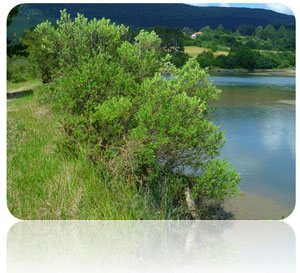 The presence of exotic flora is expected to increase in the Basque Country, due to the rise in temperatures. On the other hand, the drop in rainfall in summer would increase the surface area of zones suffering in drought in summer and would hinder the establishment and spread of many current exotic species, but could favour Mediterranean species.
The Gran Bilbao area has the highest invasion level, even though a rise in temperature (particularly in winter) could favour the spread of some species to other areas.
In estuary ecosystems, Baccharis halimifolia is the exotic species with the greatest invasive capacity. A rise in salinity and water-logging would decrease its presence and the species could be affected in the future in the amount and distribution of rainfall.
The role of terrestrial ecosystems as carbon sinks can be seriously compromised during the coming decades.
Soil resources: Acceleration of the land degradation process
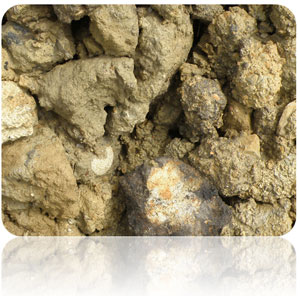 Land is subject to different degradation processes (natural and man-made), such as erosion, the loss of organic matter, pollution, salinization, loss of biodiversity, landslides, etc. Those processes could be accelerated by climate change, as temperature, rainfall, along with the chemical properties of the atmosphere have a directly impact on the land-related processes.
Agricultural resources: Climate change will have mixed impacts depending on the different crops
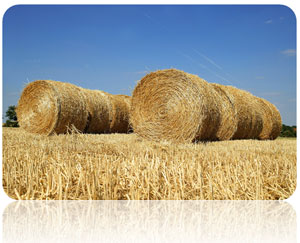 The increase in air temperature, the CO2 concentration, less water availability due to lower rainfall, along with the changes in the land and air temperature will have mixed impact, can be beneficial or damaging for the different agricultural systems.
Changes in the production cycles of the crops are forecast, with changes in the blossoming and ripening times of the fruits.
The yield of certain crops, such as winter wheat and vines, will increase. In the case of vines, the rise in temperature will mean lower total acidity, which will have a negative impact on the quality of the wine. Wine will have a higher alcoholic strength with a higher pH, lower total acidity and less aroma.
A drop in the carrying capacity of the mountain pastures is forecast, providing less grass, but of a better quality and which can be better used by sheep. However, the smaller amount of grass will particularly have a negative impact on cattle.
Forest resources: "Mediterraneization" of the Basque forestry ecosystems
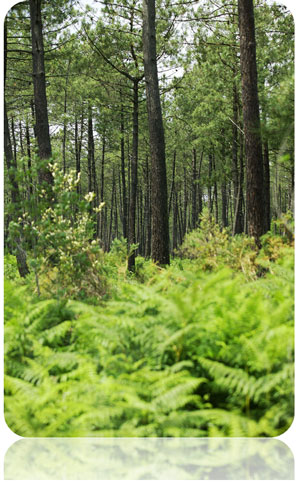 The envisaged variation in rainfall and the rise in temperature could, a priori, facilitate the "mediterraneization" of the forestry ecosystems of the Basque Country, resulting in changes its specific composition.
The forecasts show a significant impact on three typical species of Basque forests: pedunculate oak (Quercus robur), European beach (Fagus sylvatica) and the Monterey pine (Pinus radiata). Nearly all their niches are expected to have disappeared by 2080 and there will a progressive shift towards the north of Europe during this century.
The rise in extreme episodes (storms, blizzards, weather bombs, etc.) will significantly increase the annual volume of timber damaged by natural disturbances.
The balance between insect pests and their natural enemies will be affected. In general, the rise in temperature will favour an increase in insects and their survival during the winter.
Wooded areas play an essential role as carbon sinks and regulate the permeability of the soil. Therefore, forestry policies will have to take into account the environmental conditions of the immediate future to ensure that forests continue to be large CO2 sinks and help to collect rainwater.
Health: Heat waves and breathing problems
 The rise in temperatures will mean poorer air quality, particularly in summer, which will have a negative impact on health. There will be a rise in morbidity rates due to heat waves and an increase in acute breathing problems, particularly due to allergies. These are two problems that will be aggravated by the progressive ageing of the population.
The health impact means an economic impact due to the need for greater investment in care and the higher spending on hospital and medical needs.
Last modified date: