ERRANDONEA, YELLOW JERSEY AND FILET IN THE SADDLE
author: Ander Izagirre,
"Poulidor in yellow at last".
The journalists wrote this headline, and a few others like it, on the night of June 29th 1967. They had the chronicles already written but not sent out yet, waiting for the last eight or ten cyclists to finish that invention of a night time trial. The closing of the newspaper was upon them.
It was the first prologue in the history of the Tour: a time trial of just 5.8 kilometres through the winding, cobbled streets of Angers, scheduled at a very late hour, lit by gas lamps, adding another dash of excitement. The French Raymond Poulidor decided to start among the first, at seven in the evening, still in daylight, so that he could go to the hotel early, have dinner and rest for the next day. But it turned out that he had set the best time, three hours had gone by and none of the favourites had beaten him, neither Janssen nor Gimondi nor Karstens nor anyone else. They wouldn't let him go back to the hotel: he was going to climb the podium to receive his first yellow jersey in the Tour.
It was an event awaited by the whole of France. The dramatic Poulidor spent fifteen years hovering around the final triumph of the Tour. Between 1962 and 1976, he stood on the podium in Paris eight times (three second places and five third places) but never wore the yellow jersey on a single day. Every time he came close to glory, he would fall, suffer a puncture or be run over by a motorcyclist. Poulidor came into the cycling history and popular culture as the eternal runner-up. His path was blocked by the greats of both decades (Anquetil and Merckx) but also by other less brilliant cyclists who nevertheless had the chance to concentrate all their strength and luck in a single stroke: Aimar, Pingeon, Janssen, Van Impe, cyclists who won a Tour and who are hardly talked about.
- If I had won a Tour, nobody would remember me", said Poulidor.
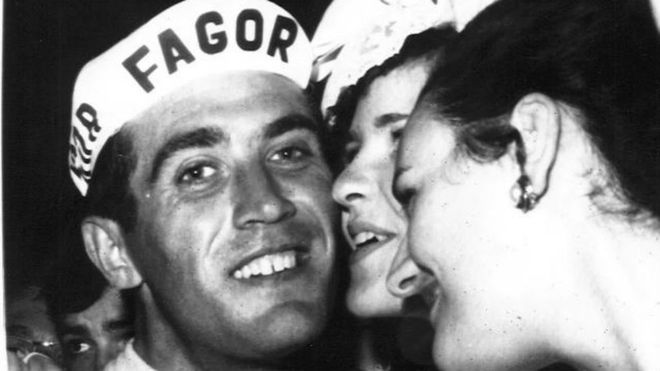
In the 1967 prologue, when the photographers were preparing to take that longed-for image of Poulidor in yellow, with only a handful of little-known cyclists about to arrive, José María Errandonea appeared.
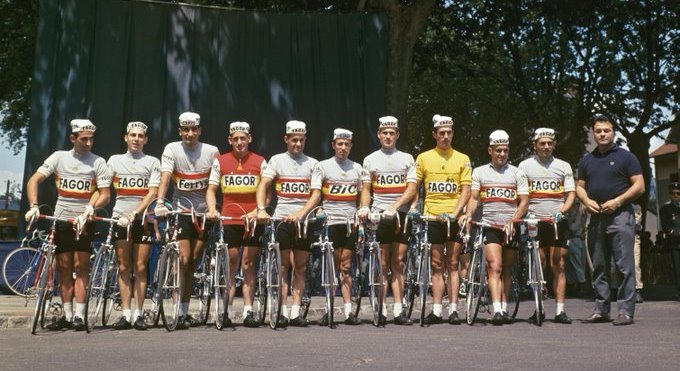
-I took a risk, explained the rider from Irun, from the Fagor team, although the Tour was being disputed by national teams. It was a very hot day, I spoke to my director Saura and we decided that I would start among the last ones, at ten o'clock at night, because it would have cooled down and that would be an advantage. The problem was that it was dark, but Saura was close enough to light me up with the car's headlights.
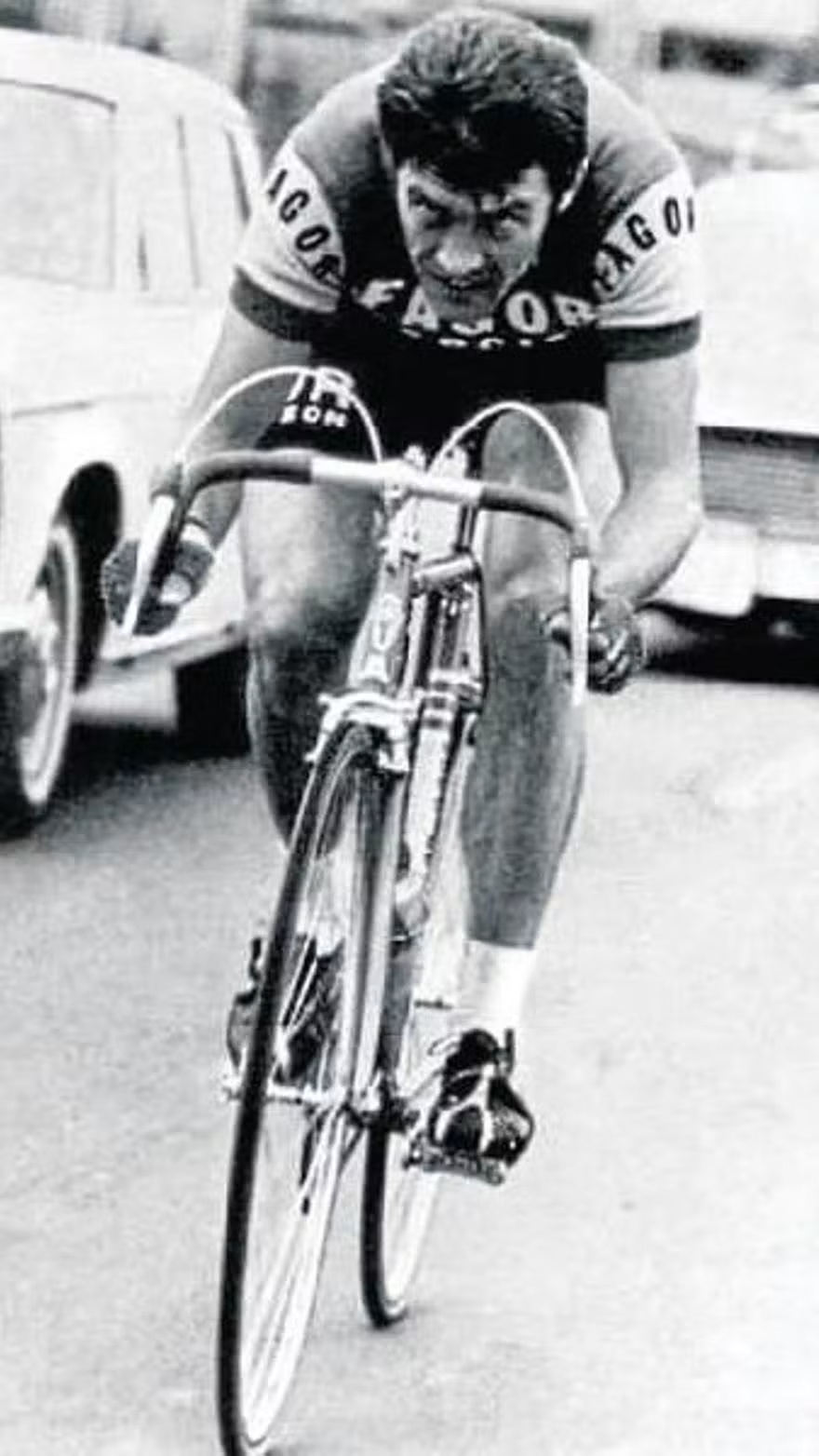
Errandonea was a specialist in short distances. He had been a veteran of the velodromes, where he had competed in the 1960 Olympic Games and had won four Spanish pursuit championships. He also triumphed in the prologue of the 1966 Vuelta. And just five days before the start of the 1967 Tour, he had even won a 48-kilometre time trial in the Tour of Switzerland. He was in top condition and decided to take all the risks to wear the yellow jersey.
- The Angers circuit was very explosive, full of turns and counter-turns, steep hills, cobbled areas. I took a big risk on a curve with paved roads, I spun out, the rear wheel slipped and I lost half a metre; luckily I hit a cobblestone and I didn't fall by a miracle.
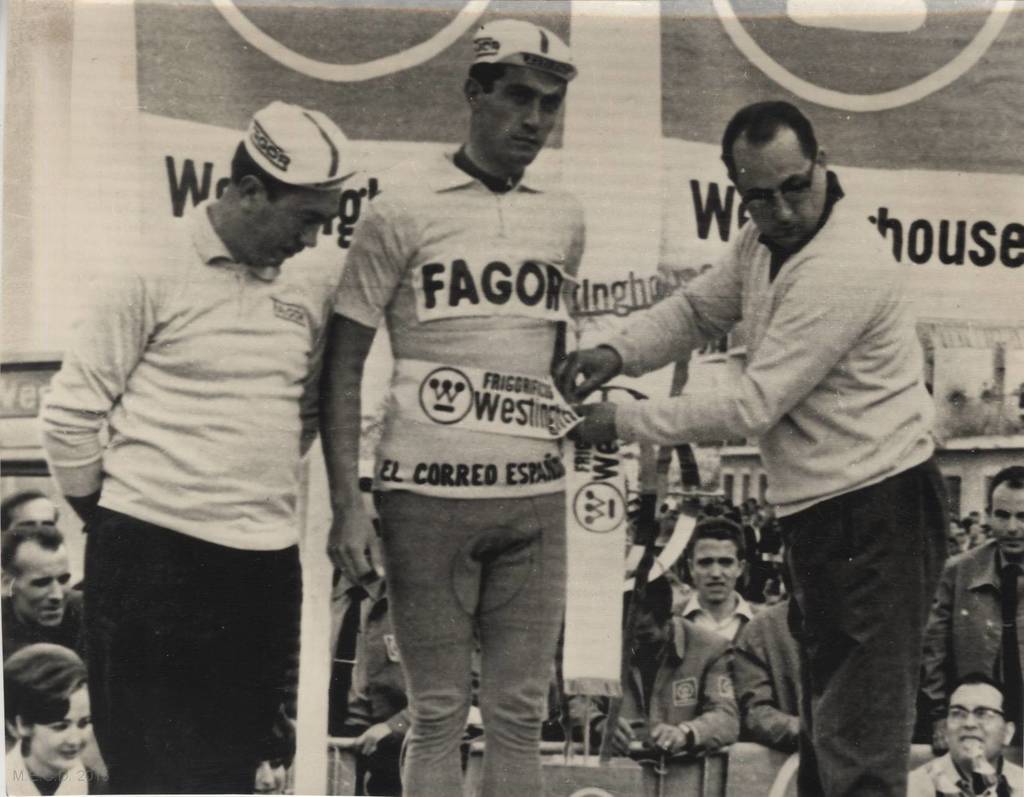
At the very last minute, Errandonea beat Poulidor by six seconds, to the dismay of the French fans and the annoyance of the journalists, who had to rewrite the chronicles at full speed.
The Basque immediately went from euphoria to calamity.
- On the same day of the prologue, I already had problems in my perineum, I felt an inflammation, and the saddle was bothering me. As the prologue was very short, I held on. But I got a furuncle and the following stages were already many hours of pain...
Boils were quite common in those days. The chamois pads of the shorts were made of leather, rough, they formed folds, and with the accumulation of hours and days of cycling, with the sweat and dust, with the rough and bumpy roads, any imperfection in the pad could leave the perineum of the cyclists red hot. The rubbing caused boils, abscesses and fistulas. Cyclists tackled this problem in any way they could, by applying cream to the chamois pads to keep them elastic, or by putting on handmade padding. The most common was the one used by Errandonea himself:
- For the first stage on the line, they bought me a piece of meat, a steak, and I put it on the area of the boil to cushion the rubbing with the saddle. But nothing, it went very badly.
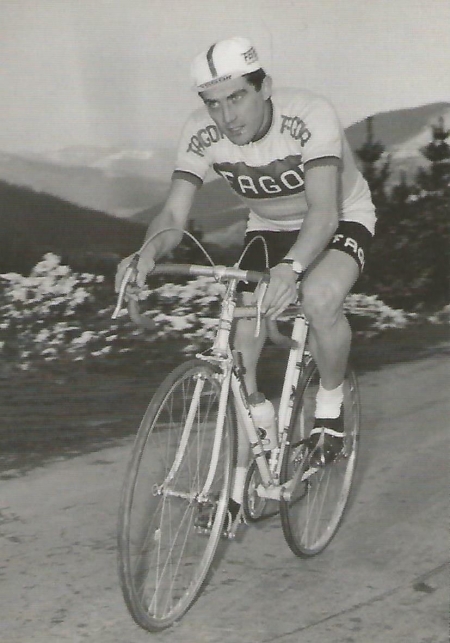
He held on for a day in the yellow jersey, but just at the start of the second day he fell and had to chase the peloton for many kilometres in the saddle, with no breaks to change his position from time to time to relieve the pain. He managed to rejoin the peloton but thirteen escapees arrived with a small advantage, enough to unseat him from the lead. On the third stage he could not take it any more and dropped out.
- Before the third stage they tried to cut my boil, but it wasn't mature yet, it didn't burst and they left it worse - recalls Errandondea-. I couldn't sit down, the pain was unbearable. It made me very angry, because I was coming back from the Tour of Switzerland very strong and I saw myself as having a chance to have a great Tour. But I got on the train and went home.
Poulidor understood that winning is not the only way to make history. There are others that are much more memorable, like spending your whole life on the verge of winning and never succeeding. Errandonea also realised the phenomenon, that part of his glory came from the collateral effect of his triumph in Angers: "People remember me because I was the one who left Poulidor without yellow". Errandonea's glory was short-lived, just two days, but it remained in his memory forever: it was the first Basque yellow jersey.
Author: Ander Izagirre