KAS Y FAGOR: TWO BASQUE TEAMS FIGHT FOR THE TOUR
author: Ander Izagirre,
The harder it rained, the more Luis Otaño was taking advantage. The all-round cyclist from Rentería had attacked on the first pass of a mid-mountain stage, the col de Grimone, and had been joined by two great climbers: Julio Jiménez and Joaquín Galera. He made the most of the downpour to take his chances on the descent and leave them behind, until he went off on a bend and went into a hairpin. He didn't care: he got back on his bike bruised and went downhill again.
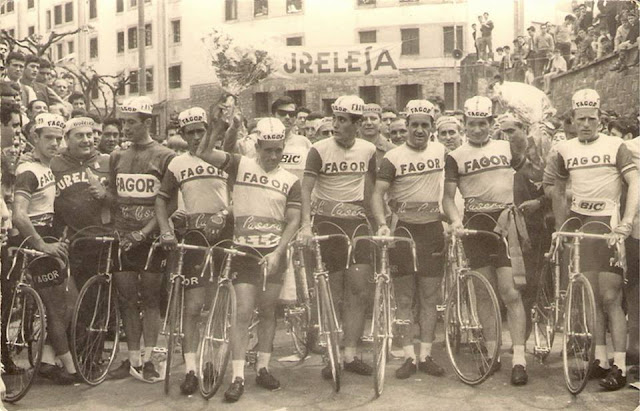
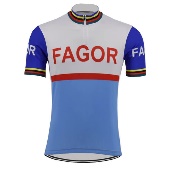
Otaño gambled because in 1966 he was perhaps facing his last chance. He had accumulated important victories, come within half a minute of beating Poulidor in the Vuelta a España, but he had taken part in the Tour nine times and had never shone so brightly. He achieved a five-minute lead and on the Col d'Ornon the climbers only took half of it, so he had plenty of time to raise his arms at the finish line in Bourg d'Oisans. It was the first victory in the Tour for a cyclist from Guipuzcoa and a team from Guipuzcoa: Fagor.
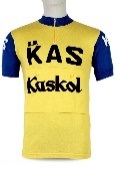
The runner-up, the Andalusian Joaquín Galera, rode for Kas. This team from Alava was taking part in its fourth Tour and in 1964 it had already scored its first victory, a team time trial, thanks to the characteristic that defined it during the 1960s and 1970s: the strength of the block.
In Bourg d'Oisans, twelve riders from Kas and Fagor finished in the top twenty-five. Among them, were representatives of a batch of Basque cyclists who were already rubbing shoulders with the best in the Tour: José Antonio Momeñe (fourth in that 1966 Tour), Patxi Gabika (seventh), Valentín Uriona (fourteenth), Aurelio González (stage winner and winner of the Mountain in 1968), Txomin Perurena (winner of the Mountain in '74), who would be joined by José María Errandonea (winner of the prologue in 1967), Gregorio San Miguel (fourth in 1968), Andrés Gandarias (fifth in 1969)...
- In 1966, Kas won the team classification and Fagor was fourth. That classification was given much more importance than now. And having two Basque teams at the Tour was very striking- states Ramón Mendiburu, who rode that edition with Fagor.
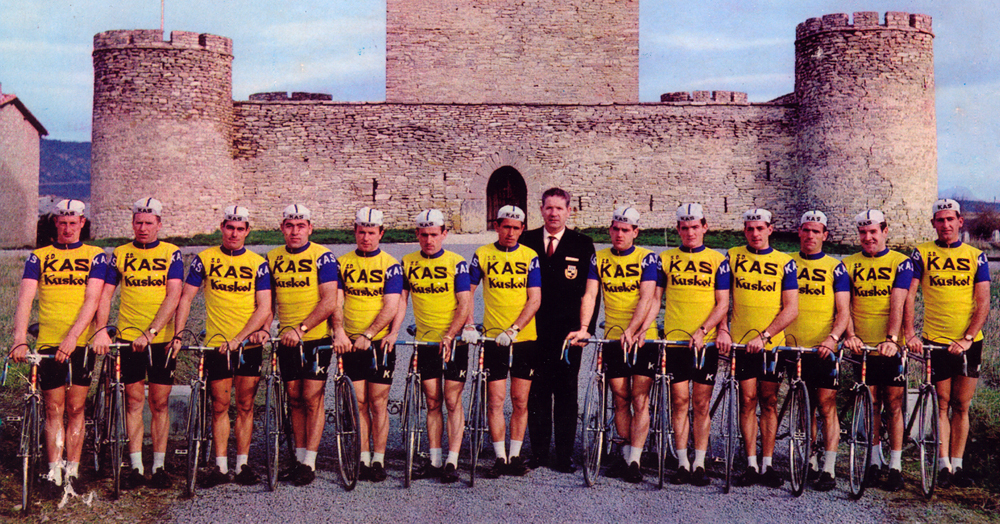
Dalmacio Langarica, director of the Kas Team, cared more about the team classification than the individual one. And at Fagor they also appreciated the collective spirit: there was a reason why it was a cooperative company, the origin of the Mondragón group, which spread all over the world.
- At the winter training camps, Don José María Arizmendiarrieta [the priest who promoted the cooperative movement] came and gave us talks on team spirit, collaboration, harmony...", says Mendiburu.
Basque manufacturers of bicycles and components, such as Orbea, BH, GAC and Zeus, sponsored teams at various times. But what shows the strength of cycling in the Basque Country is that companies from other sectors also bet on the sport to advertise among the general public: Kas soft drinks, based in Vitoria-Gasteiz, and Fagor household appliances, based in Arrasate-Mondragón, forty kilometres away from each other, sponsored two of the best Tour teams in the 1960s.
Kas and Fagor modernised Basque cycling, says Mendiburu:
- Before, hotels didn't want to host cycling teams. They had a bad reputation: they arrived covered in mud and grease, they made everything dirty, they gave themselves massages with oils and liniments that smelled strong, they left their sheets and towels missing... Kas and Fagor took better care of their image. We had a minibus and a couple of cars, team clothes, mechanics, masseurs... At Fagor we raced with very good bikes, with frames made by Marotías in Alegia and Campagnolo components, Sancheski jerseys made in Irun, Italian bib shorts... The salaries were also higher.
The two brands started out sponsoring amateur teams and moved on to professionals with the ultimate international ambition. Kas put together a team that won the team classification four times in the Tour, twice in the Giro and ten times in the Vuelta, and that collective strength helped him to put the almighty Eddy Merckx on the ropes more than once. With cyclists such as José Manuel Fuente, Vicente López Carril, Miguel Mari Lasa, Paco Galdos, Santi Lazcano and Antonio Gómez del Moral, they collected podiums, jerseys and stages in the three grand tours.
Fagor also tried to challenge Merckx's supremacy. Luis Ocaña, from Cuenca, who would soon become the Belgian's worst nightmare, made his very first debut in the Tour in 1969.
-We were very excited about Ocaña," reminds Mendiburu. That year he had finished second in the Vuelta, he had won the Midi Libre against Poulidor, Bracke, Guimard... He was very strong, we thought he could do something great in the Tour.
And yes, he did do something great: he composed the most legendary image of the Fagor team, the one they would never have wished for.
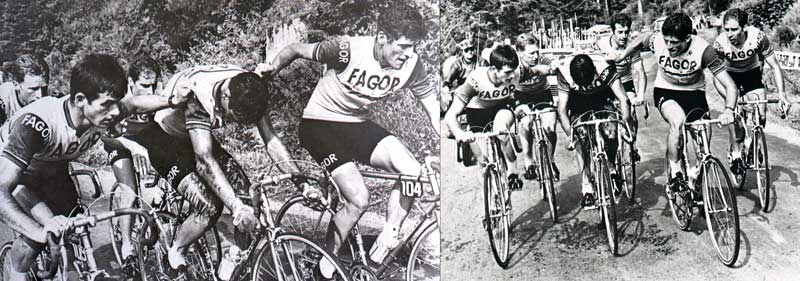
On the descent of the Grand Ballon d'Alsace, Ocaña swerved to avoid a fallen rider, hit a post and bounced headlong onto the asphalt. He laid there in shock, his face bathed in blood. His companions picked him up, sat him on the saddle and put two on his right and two on his left to push him to the finish line. They were Perurena, Manuel Galera, López Rodríguez and Santamarina, as well as Patxi Gabika, who was waiting behind to give the relay to his companions. Ocaña was barely holding on to his bike, his head buried in his chest, while a trickle of blood trickled down his jersey and thighs.
- Now they wouldn't have allowed it, the race doctor would have stopped it", explains Perurena as usual.
The photo went down in history as a chilling example of cycling solidarity.
That day Merckx crushed his rivals on the final ascent of the Ballon d'Alsace and opened the way to win the first of his five Tours. It is also fair to remember that second on the stage, the only one to lose less than a minute to the Belgian, was Joaquín Galera: from the Fagor team.
A FIERCE RIVALRY
Shortly before his ordeal in the Tour, Ocaña came second in the 1969 Vuelta, as Mendiburu recalled. And if he didn't win it, it was probably because of the rivalry between Kas and Fagor.
Langarica and Matxain, the directors of Kas and Fagor, were two strong personalities who often clashed. Sometimes, as we shall see, literally. Langarica was the veteran, the winner of a Vuelta as a cyclist and the Tour as Bahamontes' sports director, the helmsman of Kas, the team that aspired to bring together all the stars. Matxain was the newcomer, the one who was looking for his place without complexes, the one who knew how to put together a team that would give a lot of fight, the one who had his eye on Ocaña when he won the Vuelta al Bidasoa and offered him his first professional contract.
- When attacked one from the Fagor team, the Kas team went after him. When a Kas attacked, the Fagor team went for him. When a foreigner attacked, we would stare at each other", says Mendiburu.
José Antonio González Linares, a Cantabrian rider from the Kas who won a time trial in the Tour against Merckx, recalled in the newspaper 'Marca' those battles between the directors during the '69 Vuelta: "Ocaña had dropped off in a fan, Matxain was following him in his car to get him back into the first group, then Langarica arrived and swerved Matxain off the road. Then I was going to enter from behind, Matxain braked suddenly and I almost crashed into his car".
Mendiburu maintains that the riders from both teams got on well together.
- In fact, one night during that Vuelta, a couple of riders from Fagor and another couple from Kas got together to try to sort things out, because we were so focused on cancelling each other out that in the end, riders from other teams were winning. But the boss was the director.
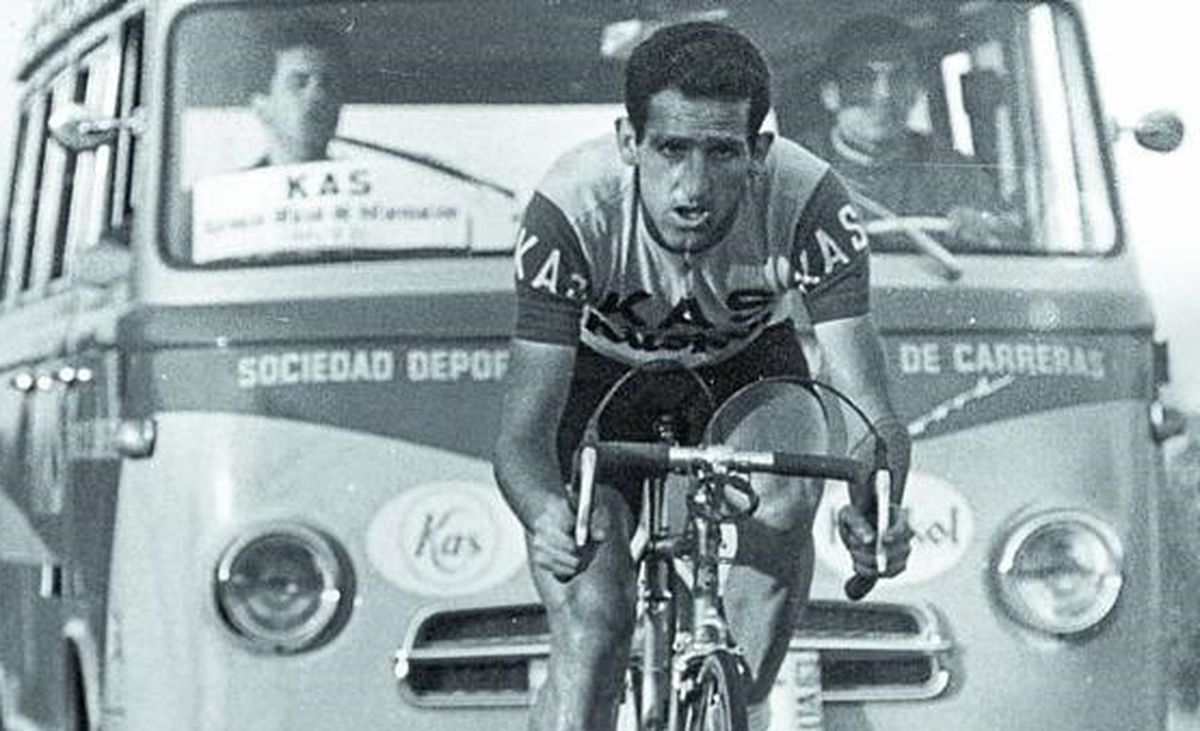
The Kas riders organised that fan out on the road to Alcázar de San Juan to take advantage of Ocaña and took the Frenchman Pingeon, winner of the 1967 Tour, on their wheel, but they didn't care. A few days later, Ocaña, in his voracious style, attacked from afar in a stage of five passes through Catalonia and took Pingeon with him, but he didn't care either: he pulled until he got empty, without asking the Frenchman for relays, because his obsession was to eliminate the Kas riders. On the last pass, Ocaña collapsed and lost four minutes. Pingeon won the stage and took the yellow jersey. It was very difficult for him to defend it, because he had hardly any help: only one of his team-mates finished the Vuelta, and in last place. But he was saved because when the Kas riders attacked him, the Fagor riders went for them. And when the Fagor riders attacked, the Kas riders pulled for them. It was enough for Pingeon to be on the wheel. Ocaña cut two minutes off him in the San Sebastian and Bilbao time trials, but it was not enough.
- If he hadn't been so obsessed with leaving the Kas riders behind in the Cataluña stage, Ocaña would have won this Vuelta", Pingeon admitted.
That rivalry electrified Basque fans in the 1960s.
- In Bizkaia they were more Kas fans, in Gipuzkoa more Fagor fans", says Mendiburu. There were even fights in the bars. But then the spectators knew how to behave, they cheered everyone on, there were never any attacks or disrespect towards the cyclists.
Kas was the longer-lived of the two teams: it competed from 1958 to 1979. Fagor did so from 1966 to 1969. Both brands returned to sponsoring teams in the 1980s. Mendiburu, who after retiring had been national coach and technical director of the Vuelta a España, worked as manager for Kas and then for Fagor in the latter period.
- They were encouraged to set up teams again, because cycling was already broadcast live on television and offered a very good advertising showcase", he explains.
They entered into a much more global cycling. They were Basque sponsors who set up teams with riders, directors and assistants from many countries, including world stars such as Sean Kelly at Kas and Stephen Roche at Fagor.
At the end of the 1980s, the adventure came to an end. What remained was the story of two teams that fuelled a massive passion for cycling in the Basque Country.
Author: Ander Izagirre